Two thousand years of it
This is what happened to people who crossed the bridge, from the first martyrs to today.
And the change God makes in people isn’t just theory. Look at what it has looked like across two thousand years:
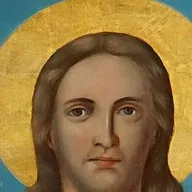
He was one of the first , chosen to make sure the poor widows in the Jerusalem church got their share of food.
He also preached about Jesus, and the religious leaders put him on trial for it.
He didn’t back down. They dragged him outside the city and stoned him to death.
A young man named Saul stood watching, holding the coats of the men throwing the stones.
And as the stones hit him, Stephen knelt down and prayed for them: Lord, do not hold this sin against them.
He died praying for the people killing him.
Saul went on to hunt Christians down, until he met the risen Jesus and was changed completely.
We know him as , the man who wrote much of the , which is the part of the written after Jesus.
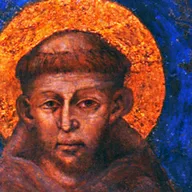
He was the son of a rich cloth merchant in Italy. As a young man he wanted parties, fine clothes and glory as a knight.
Then came war, a year in prison and a long illness, and the old life stopped satisfying him.
He had always found lepers disgusting; he wrote later that even the sight of them was bitter to him.
One day, riding outside Assisi, his home town, he met one on the road. He got off his horse, gave him money, and kissed his hand.
When his father dragged him before the to give back the family’s money, Francis gave it back, along with the clothes he was wearing.
He spent the rest of his life poor, with the poor, and the brothers who joined him became the Franciscans.
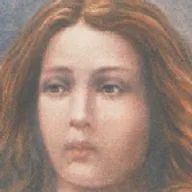
She was an 11-year-old girl from a poor farming family near Rome.
A 19-year-old neighbour, Alessandro, tried to force himself on her. She fought him off, and he stabbed her 14 times.
She lived for about a day in hospital.
Before she died, she said she forgave him, and that she wanted him with her in .
She was 11, and she forgave the man who killed her.
Alessandro went to prison, unrepentant for years. Then, he said, she came to him in a dream, and he broke down.
When he got out, he went to her mother and asked for her forgiveness, and she gave it.
In 1947 he was in the crowd in St ’s Square in Rome when the Church declared Maria blessed, which is the step before sainthood.
He spent the rest of his life working at a friary, which is a house of Franciscan brothers.
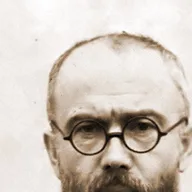
He was a Polish Franciscan priest who ran a printing press that reached hundreds of thousands of readers.
The Nazis arrested him and sent him to Auschwitz, their death camp in Poland.
One day a prisoner escaped, and as a punishment the guards picked ten men to be starved to death.
One of them, Franciszek Gajowniczek, cried out: my wife, my children!
Kolbe stepped out of the line and said he would take that man’s place.
Who are you? the officer asked. Kolbe answered: I am a Catholic priest. The officer agreed.
In the starvation bunker, Kolbe led the other men in prayer and hymns.
After two weeks without food he was still alive, so they killed him with an injection.
Gajowniczek survived the war, went home to his family, and lived to 93. He was there in Rome in 1982 when Kolbe was declared a saint.
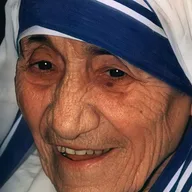
She was an Albanian nun who taught at a girls’ school in Calcutta, India, for almost twenty years.
In 1946, on a train, she felt God calling her to something else: to serve the poorest of the poor.
She left the school, started a new order of sisters, and opened a home for the dying, people picked up off the streets that nobody else would touch.
She washed them, sat with them, and made sure they died knowing someone loved them.
After she died, her letters showed something nobody had known: for almost fifty years she had felt God was far away, and she kept going anyway.
Her homes have also been criticised for the standard of their medical care, and that’s worth reading about too. But the love was real, and it was costly.
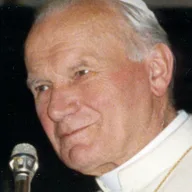
was the , the head of the Catholic Church, from 1978 to 2005.
In May 1981, in front of a crowd in St Peter’s Square, a gunman named Mehmet Ali Ağca shot the pope at close range.
The bullets tore through his stomach; he lost a huge amount of blood and nearly died.
Days later, still in hospital, he said he had already forgiven the brother who shot me.
Two years later he went to see Ağca in his prison cell in Rome.
They sat close together and talked quietly for about twenty minutes, the pope holding the hand of the man who had tried to kill him.
He didn’t just say he forgave Ağca. He went and sat with him.
Years later the pope met Ağca’s mother too, and Italy eventually pardoned the gunman.
Which of these would you find hardest?
Pick an answer below.
And these are just the famous ones. The same thing is happening quietly in ordinary people, in ordinary parishes, all over the world.
And it isn’t only Catholics. Corrie ten Boom, a Dutch who survived a Nazi camp, later shook the hand of one of its guards and forgave him.
The 21 men killed for their faith on a beach in Libya in 2015 were Coptic , from the ancient church of Egypt.
The doesn’t check denominations.
And you don’t do it alone.
We have the whole family of believers, which the Bible calls the body of , and even Mary, Jesus’s own mother, who is our mother in heaven too.
They’re all praying for us and cheering us on every step of the way.
It’s just so beautiful.
You can stop here.
Pictures: Stephen, Bulgarian icon (Velko Iliev, public domain); Francis, fresco by Cimabue; Maria Goretti, painting by Giuseppe Brovelli-Soffredini; Maximilian Kolbe, 1936, photographer unknown; John Paul II, White House photo (all public domain); Mother Teresa, photo by Kingkongphoto, CC BY-SA 2.0. Via Wikimedia Commons.



